Gas burns clean enough that people assume the chimney stops mattering once the wood is gone. It does not. Gas exhaust is mostly water vapour and carbon dioxide, and by the time it reaches the top of a tall brick stack it is far cooler than wood smoke. That cool, wet exhaust condenses on the inside of an old clay flue, and over the years it softens the mortar between the tiles and flakes the tile faces. In Glendora we see this most behind gas inserts set in without a liner, and in chimneys that once carried an old gas furnace or water heater.
When a gas appliance needs a liner
- A gas insert. An insert needs its own liners from the unit to the top of the chimney. One that vents into the old smoke chamber leaks exhaust into the house and wets the brick from inside.
- A flue that is too big. A gas appliance on a large clay flue built for wood cannot warm it enough to draw well. The exhaust lingers, condenses and can spill back into the room.
- Cracked or missing tiles. Camera footage that shows gaps, offsets or broken tiles means the flue cannot hold exhaust on its own any more.
- Quake damage. Shaking from the 1991 Sierra Madre quake, and again in the 1994 quake, opened tile joints in chimneys up and down the foothills, often where nobody can see them from below.
Clues from inside the room
- A sour, chemical smell from the fireplace on humid days
- Water marks or a white crust on the firebox walls around an insert or log set
- A pilot that flickers or lifts when the wind picks up
- Flakes of tile or mortar gathering on the smoke shelf
None of these proves the flue has failed. Each one is a reason to have it filmed before another season of gas exhaust goes up it.
What the camera shows first
We do not quote a liner without looking down the flue. A Level 2 inspection at $410 sends a camera from top to bottom and records what it finds. The footage tells us whether the tiles can stay as a sleeve, how large the flue is and where any offsets sit, which in turn decides whether a flexible stainless liner can pass or another approach is needed. If you already have recent footage from an earlier visit, we start by looking at that.
What sets the price of a liner
- The appliance. Insert, log set, furnace or water heater: each calls for a different liner size, and an insert needs a pair.
- Length. A one-story ranch chimney is a shorter run than a two-story stack on a hillside lot.
- Offsets. Bends in the flue slow the draft and can call for a smaller liner or extra work at the smoke chamber.
- The top. Every liner ends in a top plate sealed to the crown and a cap. A crown that is breaking up gets repaired on the same visit.
- What has to come out. An old damper, broken tiles or a failed earlier liner.
A gas liner has no published price from us, so the quote follows the camera run, with each item on its own line. When the liner goes in with a new insert, both appear on the same quote.
For a liner quote, tell us what the chimney vents now, how many stories it rises and whether it has had a camera down it in recent years. We will book the Level 2 or look at the footage you already have.
What the job looks like on the day
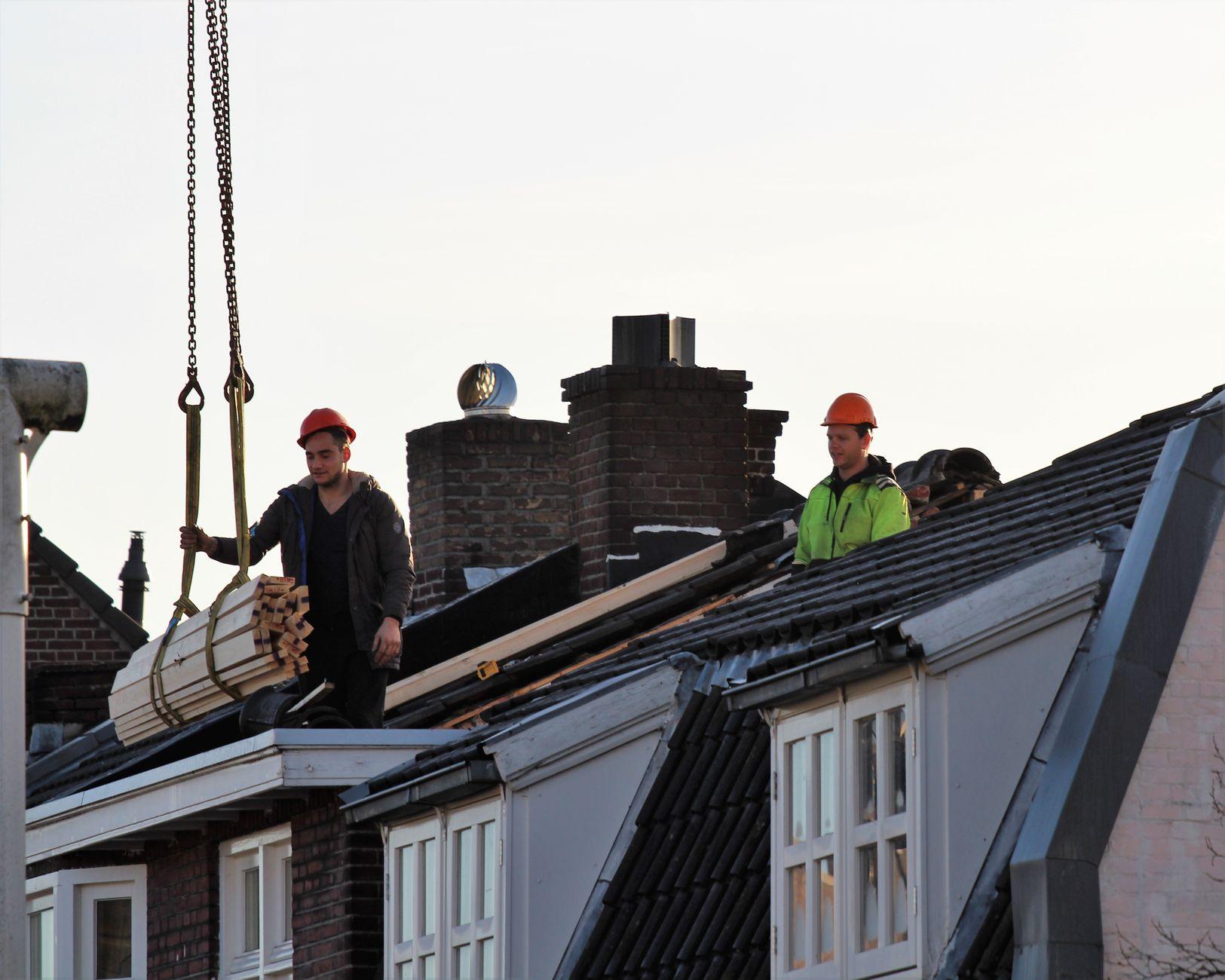
We cover the floor and the hearth, then work from the roof. The stainless liner goes down the old flue, guided past any offsets, and is joined to the appliance collar at the bottom. At the top a plate closes the gap between the liner and the old tile, and the cap goes on over it. Then the appliance is lit, the draft is checked at the unit and a carbon monoxide reading is taken in the room. You get photos of the top, the connection and the finished cap.
What the written quote covers
The quote names the liner material and diameter, the length, the top plate and cap, any insulation the clearances call for, removal of old parts, crown work if it is needed, and the test at the end. Masonry repairs found on the way are listed separately, so you can see what the brick needs apart from the liner. The chimney liner installation page covers relining for wood and gas, and the gas fireplace repair page covers the appliance side.
Liners and the rest of the chimney
A liner fixes the venting. It does not hold up the brick around it. If the stack is cracked at the roofline or the upper courses are loose, that structural work comes first, and our up to code repairs page explains how we order it. The same goes for a crown with open cracks: the liner top plate seals to the crown, so a failing crown undoes the seal.
Liners across Glendora and nearby
Houses in Glendora, Azusa, La Verne and West Covina built in the 1950s and 1960s mostly have clay tile flues sized for wood. Many now feed a gas insert or a log set, and some still carry the vent from a water heater tucked in a hall closet. Those are the chimneys we reline most often.
If your chimney carries gas exhaust and has never had a camera down it, start on the contact page. We will book the inspection and write up what the flue needs.
Want Your Own Unit Checked?
Heather Chimney Group sends technicians out from Glendora across Glendora and Los Angeles County. They meter the pilot, valve and igniter, check the vent, and write down the failed part and its price before anything is replaced.