Owners in Glendora who are finished with a smoky, drafty brick fireplace usually ask us to price two different jobs. One keeps the old opening and seals a gas unit inside it. The other puts a gas fireplace somewhere the house never had one, framed into a wall with its own vent to the outside. Both end with a glass front, a burner and a remote on the coffee table. On the house itself they are very different pieces of work, and the price ranges show it.
Side by side
| Question | Insert in the old opening | Sealed unit in a new wall |
|---|---|---|
| Where it sits | Inside the masonry firebox you already have | A framed wall, a corner or a bump-out |
| Exhaust route | Liners up the old flue to a new top | New pipe out through the wall or the roof |
| Our published range | $2,900 to $5,850 | $4,650 to $9,350 |
| What swings the price | Opening size, chimney condition, gas at the hearth | Framing, finish work, vent route, length of gas run |
How an insert works in a Glendora brick fireplace
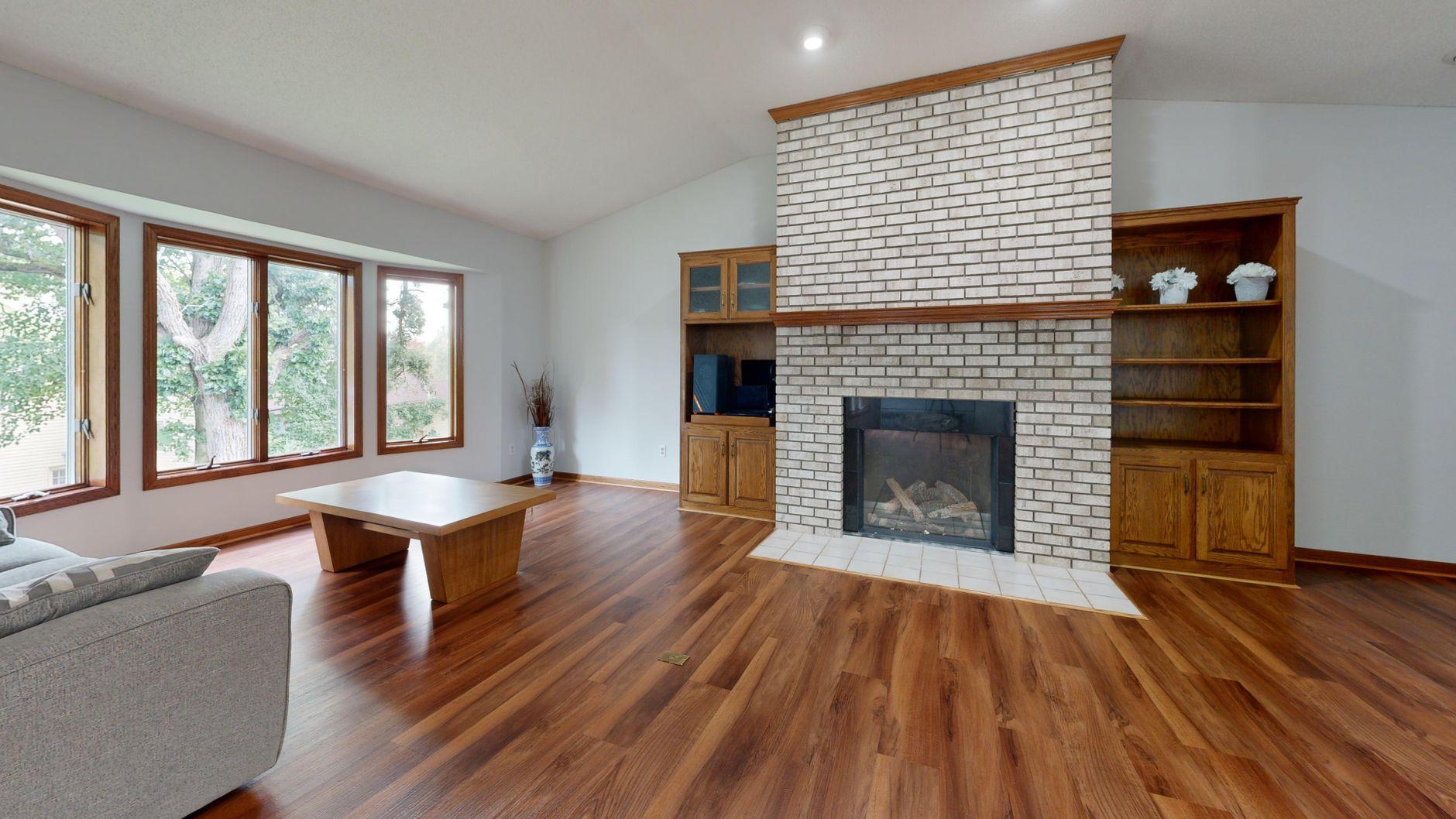
An insert is a steel box with a sealed glass front that slides into the firebox. It takes in combustion air and sends out exhaust through a pair of aluminum liners running up inside the old clay tile flue to a new termination at the top. The brick stops doing the venting and becomes a sleeve around the pipes. The room stops losing warm air up an open throat every night, which is the reason most people want one.
The chimney decides whether the job is simple. Before we quote an insert we measure the firebox depth and width, and look at the damper, the smoke chamber and the top of the stack. The old damper plate usually sits in the path of the liners, so taking it out is part of the work. A crown that is breaking up, or a chimney leaning away from the siding, gets dealt with before a new appliance goes in. Putting a sealed insert into a failing chimney spends the money in the wrong order. Plenty of Glendora chimneys from the 1950s and 1960s are fine for this job. Others came through the 1991 Sierra Madre quake with cracks in the upper courses that nobody has looked at since.
How a sealed unit in a new wall works
A new-location unit is a factory-built firebox framed into the house, finished in drywall, stone or tile, and vented through one pipe that has an inner and an outer wall. Exhaust leaves through the middle while fresh air arrives around it. It needs no chimney, which is why it suits a family room, a primary bedroom or a house that never had a fireplace.
The price climbs with what has to be built. A unit against an outside wall, vented straight through it, lands near the lower end. A unit on an inside wall that needs a vent run up through the attic and out through the roof, a new gas line from the far side of the house, and a stone surround to the ceiling lands near the top. Stucco patching outside and a roof penetration add their own lines.
What settles which one we suggest
Four questions usually decide it.
- Is the chimney sound? If the masonry needs a large repair, a new-location unit can cost less overall than an insert plus a rebuild.
- Where do you actually sit? If the old fireplace is in a formal living room nobody uses, putting the heat in the family room may be the better spend.
- Is there gas at the hearth? Many older fireplaces already have a key valve from a log lighter. Where there is no line, the length of the run matters for both jobs.
- What does Rule 445 allow? South Coast AQMD Rule 445 bars wood-burning fireplaces in new developments and sets no-burn days for the ones already built. A gas appliance sits outside both limits, so either choice here works.
For a written quote on either job, tell us where the fireplace is now, where you want the heat and whether there is gas at the hearth. We will book a measuring visit.
What the written quote lists
Whichever way you lean, the quote from Heather Chimney Group splits the parts so you can compare like with like: the unit and its trim, the vent or liner kit, the gas line work, any masonry or framing, finish work, and hauling away the old damper or doors. Masonry repairs found on the chimney are shown apart from the insert, so you can see what the chimney needs whatever goes in front of it. For a sealed unit in a new wall, the quote shows the vent route we plan and where the cap will sit outside.
Gas logs, the third option
Some owners want only the look of a fire in the old opening and do not need the heat. A vented log set gives that for less than either job above. It burns with the damper held open, so it warms the room very little, but it keeps the brick fireplace as it is. Our post on replacing a gas log set covers what goes into that price.
Fitting either one in Glendora and nearby
Older neighborhoods close to downtown Glendora tend to have masonry fireplaces that suit an insert, while newer tracts up toward the foothills more often came with a factory-built unit already. In West Covina and Azusa we see plenty of both. The fireplace inserts page covers the insert side in more detail, and gas fireplace repair covers the unit you may be replacing.
Want the two options compared on your own house? Start on the contact page and we will come out to measure both.
Want Your Own Unit Checked?
Heather Chimney Group sends technicians out from Glendora across Glendora and Los Angeles County. They meter the pilot, valve and igniter, check the vent, and write down the failed part and its price before anything is replaced.